Lending operations don’t usually break in obvious ways. They break through failed disbursements, disputes, repayment adjustments, schedule changes, and last-minute escalations that compound as your loan book grows.
This month’s updates focus on reducing those moments. We’ve shipped improvements that give you better control over repayments, adjustments, receipts, internal expenses, and portfolio-wide changes so common edge cases don’t turn into operational issues.
Below is what’s new, what’s better, and what we’re rolling out next.
What’s New
📥 Download transaction receipts from the admin console
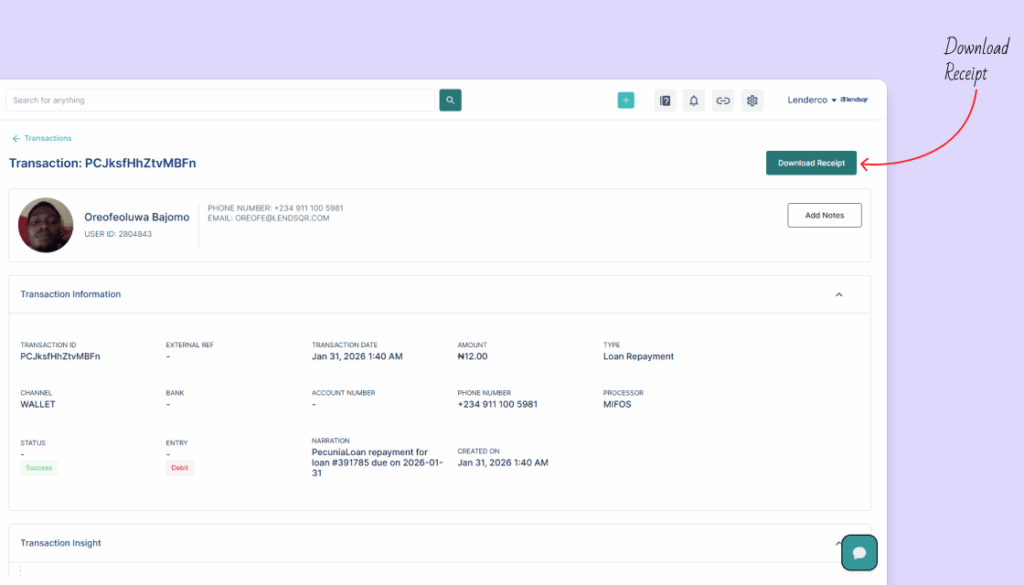
When a borrower calls at 4:55 PM asking for proof of their last payment, you can now generate and download a transaction receipt directly from the admin console.
Receipts are available instantly for any completed transaction and include all relevant payment details. This removes the need to search across systems or delay resolution while waiting on internal teams.
As a result, payment disputes are resolved faster, escalations reduce, and audit trails stay clean without extra operational work.
✏️ Bulk edit due dates across multiple loan schedules
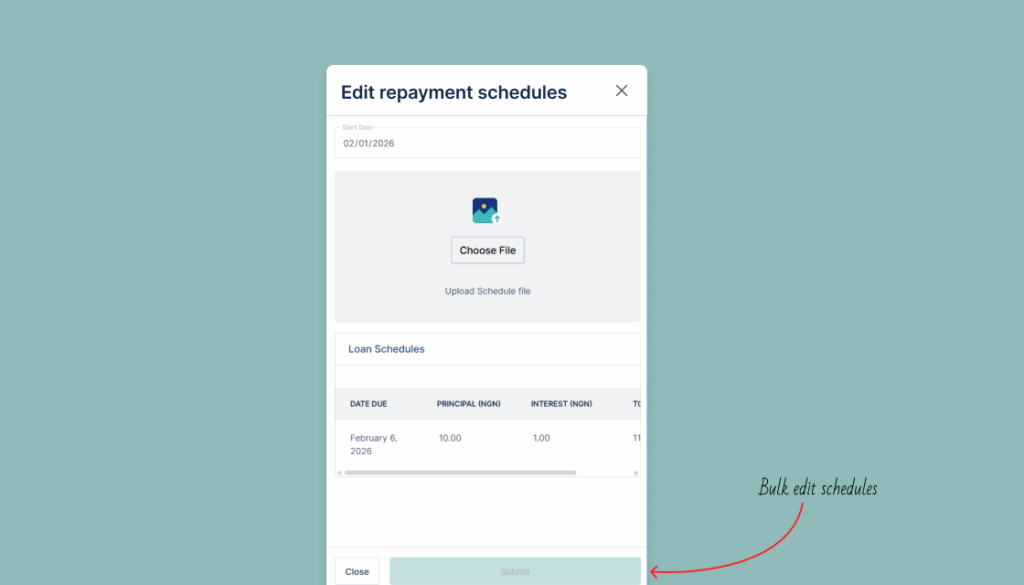
When you need to adjust multiple repayment dates for a loan, for example after a public holiday or a restructuring decision, you can now update due dates across multiple loan schedules at once.
Instead of editing each loan schedule individually, changes are applied systematically from the admin console, ensuring consistency across affected loans.
This reduces your manual effort, lowers the risk of you making errors, and keeps your repayment schedules aligned with agreed terms across your loan book.
💰Post credit or debit transactions on user wallets
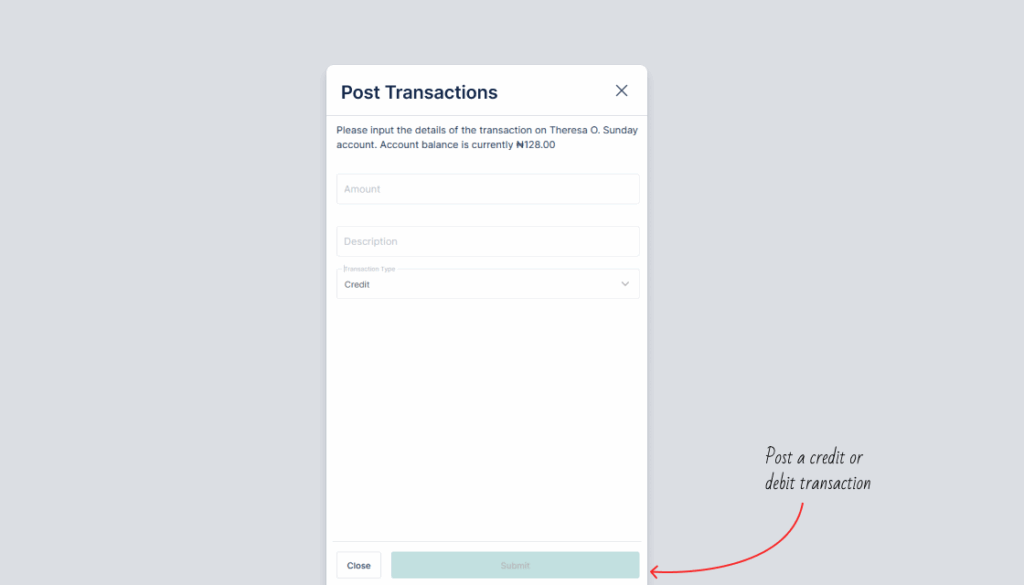
When a borrower overpays a loan and requests a refund or adjustment, you can now post a credit or debit directly to the borrower’s wallet from the admin console.
For example, instead of initiating a manual refund or carrying the excess as an unresolved balance, you can credit the borrower’s wallet immediately for future repayments or withdrawal, or debit it to correct a prior adjustment.
This gives you faster resolution of repayment exceptions, cleaner reconciliation, and more control over borrower adjustments within your lending operations.
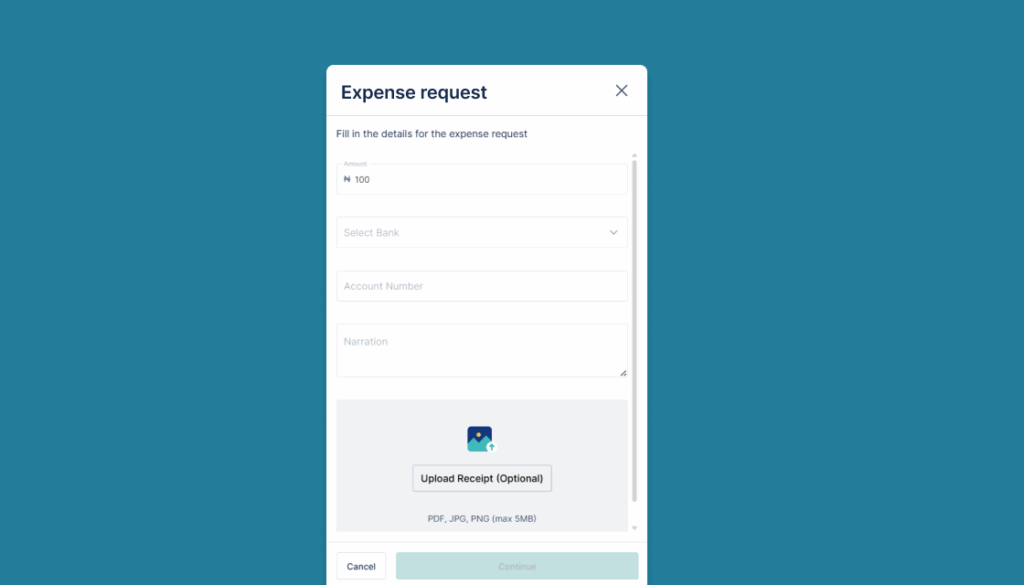
When a field officer submits a transport expense three weeks late on WhatsApp, followed by “I sent this earlier,” your team can now point them to the admin console instead.
Expense requests can be submitted directly through the admin console, with clear amounts, descriptions, and status tracking. Managers can review and approve requests without chasing context across chats or emails.
This creates a single, auditable flow for operational expenses, improves visibility into internal spend, and reduces the informal back-and-forth that usually surrounds reimbursements.
We’ve completed a major upgrade to the core system that powers your lending operations.
You won’t see dramatic interface changes, but the impact is behind the scenes. Processing is faster, the system is more stable under load, and the platform is better equipped to handle higher transaction volumes as your loan book grows. Areas that previously experienced lag during peak activity have been optimized, and overall reliability has improved.
Practically, this means smoother day-to-day operations, quicker responses when serving borrowers, and fewer system-related interruptions. It also strengthens the foundation for upcoming features, ensuring new capabilities can be added without compromising performance or security.
This upgrade is about reducing operational friction today while preparing the platform to scale with you tomorrow.
🌍 Bulk customer creation now supports international and approval workflows
Bulk customer creation now better supports customers across multiple countries.
The system handles different phone number formats, address structures, identification types, and local requirements, reducing upload failures caused by rigid templates. This makes it easier to onboard customers in different markets without manual workarounds or repeated file corrections.
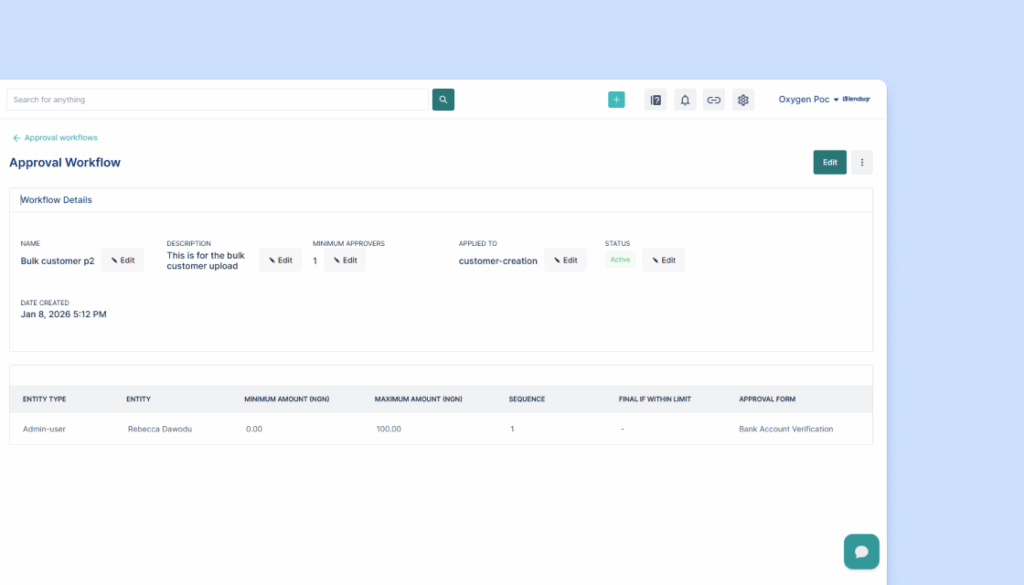
Approval workflows have also been added to the bulk creation process, giving you a review and verification step before customers are created. This allows you to catch errors, duplicates, or questionable records before they enter your portfolio.
For lenders in Nigeria, bulk uploads can now include integrated data lookups as part of onboarding. This allows you to verify BVNs, run credit checks, and validate bank account details during the bulk creation process, turning bulk onboarding into a more controlled, risk-aware workflow.
We’re introducing a 30-day free trial for new lenders who want to experience Lendsqr before committing.
This is full access to the platform and not a limited demo. During the trial, lenders can configure products, onboard real customers, process actual loans, and train their teams using the same tools they would use in production.
The trial period is designed to give enough time to migrate from an existing setup, test real workflows, and understand how Lendsqr fits into day-to-day lending operations. There’s no credit card required upfront and no obligation to continue at the end of the trial.
This offer is currently not available to lenders in Nigeria, but we’re working on extending similar options to all our markets.
🎨 UI Improvements on the admin console
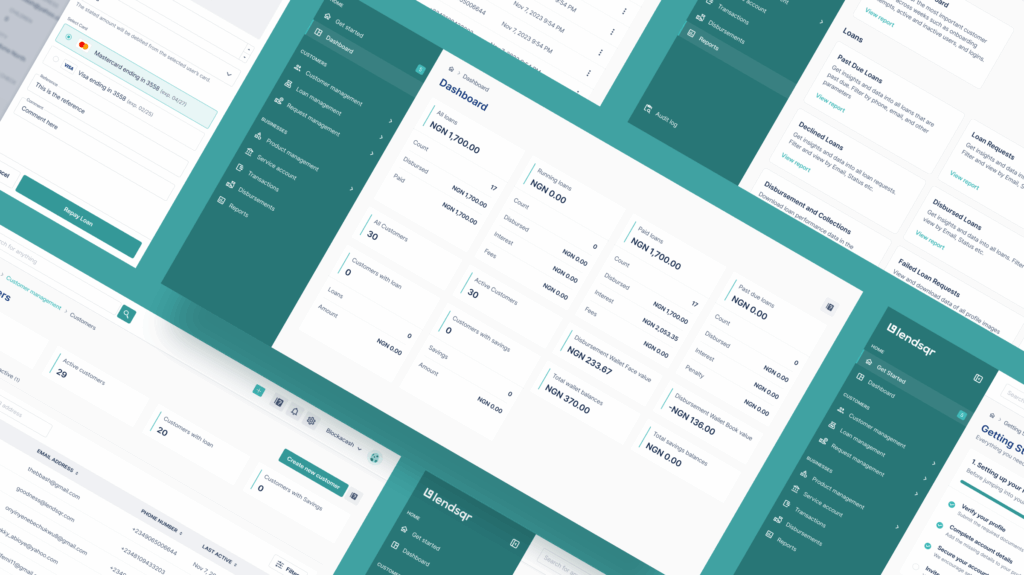
We’re making incremental improvements to the admin console to make daily lending operations easier and more intuitive.
Navigation is being refined so commonly used actions take fewer clicks. Visual hierarchy is improving so important information stands out more clearly. We’re also standardizing layout patterns and button placement to better match how admins actually move through the platform.
Some changes will be subtle, such as improved readability, clearer spacing, and smoother transitions. Others will be more noticeable, including cleaner dashboards, faster forms, and layouts that work better across screen sizes.
These updates are based on direct feedback and observed usage patterns. The goal is to reduce friction in routine tasks so the platform feels easier to use as operational complexity grows.
🔄 Improvements to direct debit activation and tracking
We’re making additional improvements to how direct debit activation and tracking work across the platform.
You’ll have clearer visibility into each stage of the activation process, from initial mandate request to successful setup. Status updates will be more explicit, and error messages will be clearer when something needs attention.
When a direct debit fails, you’ll get more specific information on why it failed and what action to take next, rather than generic error codes. We’re also improving the customer-facing activation flow to reduce drop-offs and increase successful mandate completions.
Together, these changes are designed to improve direct debit adoption, reduce manual collections, and make repayment tracking more predictable as your loan portfolio grows
Obtaining an FCA consumer credit license is a key step for businesses that want to offer loans, credit cards, BNPL, or other consumer credit products in the UK. This guide explains who needs FCA authorization, the application process, eligibility requirements, expected costs, and practical tips to help lenders navigate the licensing process successfully.
If you’re a non-profit or development finance institution (DFI), it should be easier to run a lending program if you're already doing the hard part of reaching people most others won’t.
The end-to-end loan management software that’s rewriting the rules for lenders globally by offering enterprise-grade features without the enterprise-grade costs.
September 30, 2024
Make Better Informed Decisions
Our decision model Oraculi helps you handle all modules required to form the decision model for your lending business, convenient and
easy.