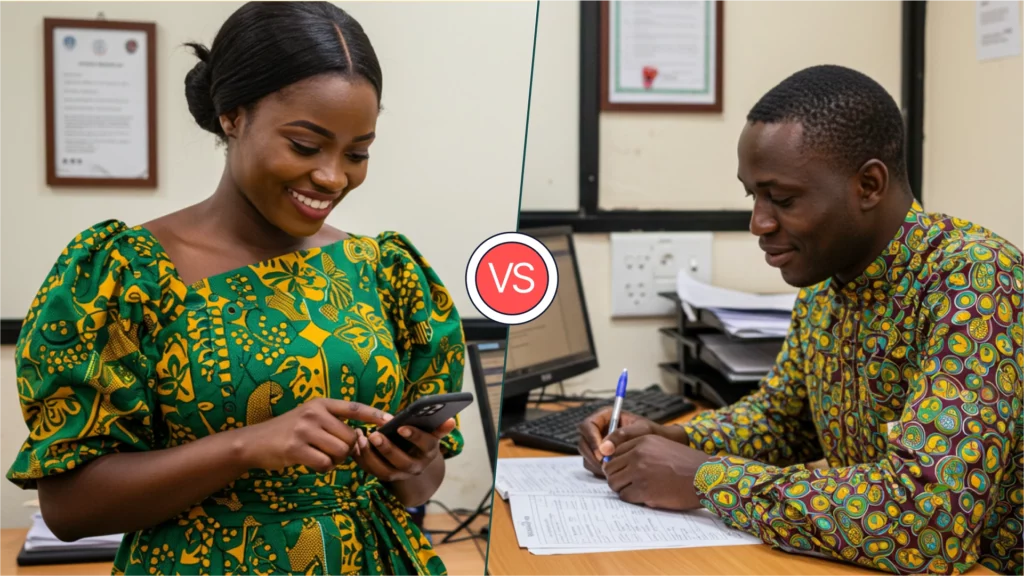
You’ve just opened your fridge. It’s not cooling. Payday is ten days away, and your savings are already stretched. Do you walk into your bank and apply for a loan, or do you head to an online store, add a new fridge to your cart, and choose “Buy Now, Pay Later” at checkout?
In Ghana, buying now and paying later is nothing new. Many of us grew up watching our parents pay for furniture, electronics, and even school fees in installments, whether through susu collectors, cooperative unions, or that shop owner down the street who trusted them to “bring the rest next month.”
What’s changed is the channel. Today, Buy Now, Pay Later (BNPL) has a digital face. Platforms like PayFlexi are giving shoppers the chance to split payments across weeks or months with just a few taps on their phone. No paperwork. No collateral. Just a quick sign-up and you walk away with what you need.
It’s tempting. But does BNPL actually beat traditional lending from banks and microfinance institutions? That depends. Not just on the cost, but on your financial goals, discipline, and what kind of credit experience you’re looking for.
Also read: Embed BNPL into your platform without becoming a lender
Quick access isn’t always a win
One of BNPL’s biggest strengths in Ghana is speed. Are you buying a smartphone or a new TV? A few clicks and you’re approved. No HR letter, no guarantor, no one calling your workplace. For a country where the formal lending process is still seen as stressful and rigid, BNPL feels refreshing.
Compare that to a traditional bank loan. You’ll fill a form, show payslips or bank statements, maybe even bring a guarantor. And even after all that, your application might be rejected or take weeks to process.
But speed isn’t everything. Fast credit can also lead to fast regret, especially when the repayment terms are buried in fine print. With BNPL, the risk is getting locked into repayments you didn’t fully plan for.
What are you really borrowing for?
BNPL is great if you’re buying something small: a fridge, a blender, maybe a laptop for school or work. Most services in Ghana cap credit limits between GHS 200 and GHS 5,000. That works for everyday items, but won’t help if you’re trying to start a business, fund a wedding, or buy land.
Traditional lenders are more useful when you need serious capital. Even microfinance institutions and credit unions in Ghana can give personal loans of GHS 10,000 and above, especially if you have savings with them or a solid repayment track record.
BNPL is a quick fix. Traditional loans are better for long-term needs.
Also read: BNPL vs. traditional lending: What works best in Kenya?
The hidden cost of convenience
BNPL often markets itself as “zero-interest,” but that’s usually if you pay everything back on time. Miss a repayment or extend your timeline? Suddenly, you’re looking at late fees and penalty charges that can quickly add up, sometimes without warning.
Many Ghanaian BNPL platforms are still unregulated, so pricing transparency isn’t always clear. That’s risky, especially for first-time borrowers or people who don’t read the small print.
With traditional lenders, interest rates are higher but they’re clear. A personal loan from a bank might come with 25–30% annual interest, but you know upfront how much you’re paying and when. There’s less guesswork, and that makes it easier to budget.
BNPL might feel cheaper, but one missed payment and the costs can rival (or exceed) a bank loan.
Want a credit score that works for you?
If you plan to eventually get a car loan, mortgage, or even a business loan, your credit history matters. Ghana has credit bureaus like XDS that keep track of how you repay loans. Traditional banks, microfinance institutions, and even some digital lenders report this data, helping you build a credit profile over time.
Most BNPL providers don’t report to credit bureaus—unless you default. So if you’re paying on time, it doesn’t improve your credit score. But default, and your name might still show up in negative reports. Not fair, right?
Bottom line: if you want to build borrowing power in Ghana, traditional credit helps you leave a good footprint. BNPL doesn’t (yet).
Borrowing without a plan is risky
BNPL thrives on convenience. But that’s also its biggest danger. Because it’s so easy to get, it’s also easy to overuse. A phone here, a mattress there, an emergency item next week—and suddenly, you’re juggling five repayments from your monthly salary. No wonder more Ghanaians are quietly falling behind.
Traditional loans slow you down. That may sound like a bad thing, but it forces you to think twice. Do I need this money? Can I repay it? What’s the plan?
With BNPL, the decision is instant. With loans, you plan ahead. One rewards impulse; the other rewards discipline.
Also read: BNPL vs. traditional lending: What works best in Zambia?
Who protects you if things go wrong?
Banks and licensed lenders in Ghana are regulated by the Bank of Ghana. That means there are rules about interest rate caps, collection practices, and how disputes should be handled. If things go sideways, you have official channels to report misconduct.
BNPL, on the other hand, is still in a grey area. Some providers operate like tech companies, not financial institutions. That means fewer protections for borrowers if something goes wrong.
The BoG is working on digital credit regulations that might soon bring BNPL players into the fold. But for now, consumers need to be extra cautious.
One size does not fit all
Honestly, it depends on your situation: Go with BNPL if you’re making small purchases, confident in your repayment plan, and just want a flexible option for things like electronics, home items, or emergency expenses. Stick with traditional loans if you need larger amounts, want to build your credit score, or prefer dealing with regulated institutions. Both options have their place, but you should always borrow with eyes wide open. Lendsqr has a marketplace where you can shop for all types of loans from over 1000+ lenders all over the world. Start here.