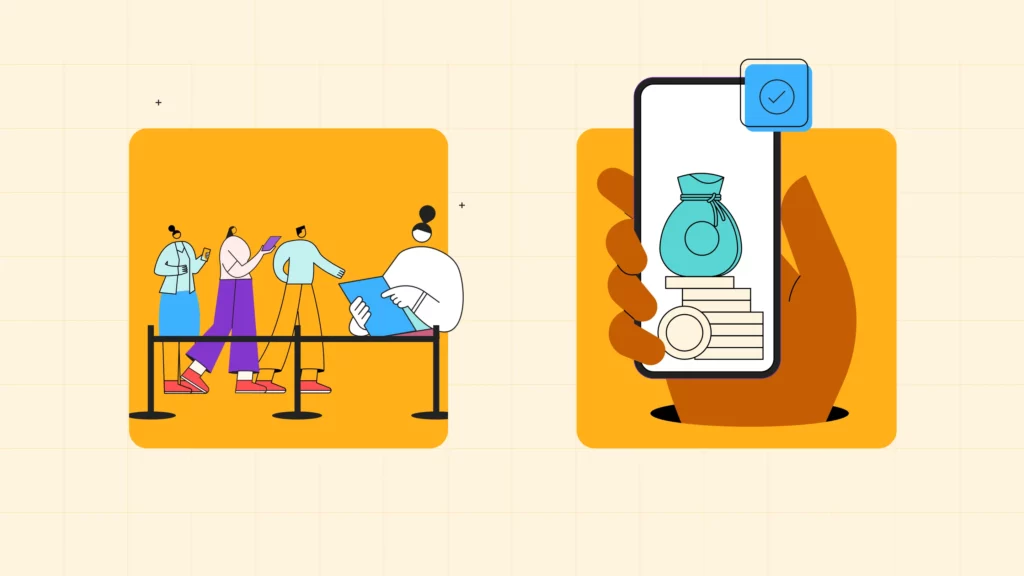
Offline lending has deep roots in humanity, dating back thousands of years to when people first began borrowing goods and resources.
What started as simple exchanges based on trust eventually grew into a complex system of loans, contracts, and interests—a business managed manually by individuals. But, this manual system is rife with risks like human error, inefficiency, and fraud.
Technology entered the scene as a force that transformed lending by automating processes, reducing errors, and offering faster and more secure transactions. With the rise of online platforms, lending became more accessible and convenient than ever.
Yet, even with these innovations, many lenders remain loyal to the traditional, offline way of doing business. Why?
While technology provides efficiency and scale, some lenders value the personal touch, control, and trust that come from face-to-face interactions.
In this article, we’ll explore the pros and cons of both offline lending vs online lending, not to declare one superior to the other, but to explore the unique benefits and drawbacks each approach offers.
Pros of offline lending
You know who you’re dealing with
The saying “the devil you know is better than the one you don’t” holds weight in lending because it is more than a numbers game and offline lending proves that.
The only other currency that lenders and borrowers trade in asides money is trust, and it comes easier when you’re able to know who you’re dealing with.
In a face-to-face setting, there’s an opportunity to engage directly, allowing for a deeper understanding of the borrower’s character, intentions, and reliability. Eye contact, body language, and even the way someone speaks and answers questions can reveal a lot about their trustworthiness and commitment.
Lenders can consider personal stories, individual circumstances, and even make judgment calls based on their gut feeling to offer personalized loan terms/products —things that algorithms are still catching up to capture.
It is effective in small and tightly knit communities
In these settings, personal connections run strong and deep, and they have unique advantages. Word travels fast and a borrower’s reputation is well known so when a customer presents an ID document, you can immediately verify it. You may know the borrower’s local area or even his/her family background.
As an added layer of security, offline lending has a more hands on approach. You can easily visit the borrower, assess living conditions, inspect their businesses, and get a better sense of how reliable the person is. For example, a borrower applies for a N500,000 business loan only to find out they’ve taken 3 loans in the past for failed business ideas and are still struggling to repay the loans.
It’s easy to start for both lenders and borrowers
One of the standout advantages of offline lending is how straightforward it is for both lenders and borrowers to start.
Unlike online platforms that require technical setups, digital profiles, and understanding the algorithms of the lending platforms, it’s simpler and more direct offline.
For borrowers, starting often means walking into the lender’s office instead of wrestling with uploading documents and waiting for system generated approvals.
Meanwhile for lenders, starting a lending operation wouldn’t demand heavy investments in lending technology. Instead of worrying about installment issues, cybersecurity risks, or learning about tech updates, offline lenders focus on the basics — building relationships, assessing applications in person, and getting loans back.
For those well known in their community, transitioning to lending would be as simple as lending to people they already know.
Featured read: Starting a lending business in Canada? Here’s how to get licensed
Cons of offline lending
Your lending operation would be confined to where your office is
This restriction limits the amount of customers you can reach especially when you want to expand your loan portfolio. Geographical boundaries, your available resources such as staff and physical office space, word of mouth, referrals, and your customers’ physical presence can limit the growth of your lending business.
Unless you have the capital to hire more people and erect more buildings, scaling operations beyond a certain point would be harder. This means you won’t be able to serve customers beyond your location especially when it takes time and effort to travel to reach you.
It is less efficient and cannot serve a large customer base
Approving loans is not as straightforward as seeing a doctor for a prescription. Most times, it takes more than one visit to finalize the paperwork.
As a result, you can only handle a limited number of customers each day. Even with a dedicated team, it would still take time to handle meetings, manual document reviews and in person negotiations. Your lending process would slow down eventually.
There’s a lot of paperwork involved
From loan applications and income verification to contracts and agreements, every step of the process typically involves physical documents or Google sheets that need filling, signing, and storage.
For borrowers, the paperwork can be overwhelming, especially for those who aren’t familiar with the legal and financial terms. So, they’re often going back and forth between the lender’s office, gathering additional documents or making corrections, which means more layers of stress and delays.
In cases where multiple forms need signatures, review, and authorization, the back-and-forth can extend the loan approval process over several days or even weeks.
For lenders, it’s a constant struggle to keep everything organized, safe, and easy to find. Papers can get lost or damaged, which can cause problems with the law or slow things down.
Plus, you need a ton of space to store everything, whether it’s filing cabinets taking over your office or even whole rooms dedicated to loan files. And as your business grows, so does the paperwork, making it even harder to manage.
It takes longer to run checks on borrowers
Offline lending puts you at a great disadvantage especially when it comes to credit checks. A borrower walks into your office with stacks of papers for application. The first hurdle lies in the expertise you need to interpret those documents and what they mean for your business.
You may know your way around managing your lending business, but it is unrealistic to expect every lender to be an expert in fraud detection, credit analysis, and financial statement reviews.
Asides that, manually reviewing these documents would take so much time and is prone to error. Sifting through paperwork, organizing and manually entering into spreadsheets are all tedious and you can make terrible mistakes especially when you’re tired and frustrated.
So, you’re left competing with the speed and precision of online systems, which is a lost battle already.
Pros of online lending
24/7 access to a global audience
Online lending breaks down the barriers of strictly operating within a geographical location and set business hours. Meaning that potential borrowers from any part of the world can access your services through various channels including web apps and configurable mobile apps at any time—day or night, during holidays and even countrywide/global lockdowns.
It gives you access to a vast pool of potential customers who may have otherwise been unreachable. You can easily reach people in remote areas, international markets from the comfort of your home/office. People can apply when it’s convenient for them so it translates to more applications, approvals, and more business.
As a cherry on top, it aligns perfectly with the pace of today’s digital world. People are looking for quick and easy access to urgent loans, so you’ll be meeting their expectations.
You can deal with more people faster and with lower costs
Online platforms are designed to handle multiple transactions simultaneously, so you have the advantage of processing a lot more loans and handling more customers without the usual costs that come with an office.
Automated systems can evaluate creditworthiness, approve loans, and disburse funds in a fraction of the time it takes to do it manually. In the end, you can satisfy your customers without sacrificing quality or your standards.
You can easily adapt to market changes
Lenders are always in competition with each other and being able to quickly adjust to realities is a major flex. For example, if there were a sudden increase in interest rates or a new regulation affecting loan terms or risk assessment, you’re able to update your lending system and loan products almost instantly.
In addition, your online lending platform gives you access to data on your customers’ behaviors so if you suddenly see a growing demand for short-term loans in a particular region, you can quickly launch tailored products to meet this demand, and capitalize on the trend before competitors realize what’s going on.
This flexibility is very useful especially during economic downturns or pandemics because you can quickly adjust your loan terms, roll new products based on demand and evolving customer needs.
Watch how to configure product offerings for your loan products on Lendsqr.
It’s easy to run full credit checks on borrowers
In just a few clicks, you can download comprehensive credit reports on your customers from various credit bureaus and get the full unfiltered picture of their financial health. This agility keeps you 10 steps ahead of fraudulent borrowers who have no intention of operating in good faith.
The underwriting process is fully automated so you can work less and earn more.
With a loan management system, your entire underwriting process is managed by lending APIs, sophisticated algorithms and machine learning models take over this task, automatically using data to figure out how likely a borrower would repay their loans.
For example, with Lendsqr’s loan management software, you can configure your loan forms and decide what information your borrowers should provide for verification,
As a result, speed, efficiency and accuracy would be the key things keeping your business afloat, since you’re able to process more applications with less effort and serve honest borrowers.
Cons of online lending
Borrowers’ data can be leaked and stolen
Online platforms collect a lot of sensitive personal and financial information from borrowers making them prime targets for cyberattacks. No matter how good your security measures are, as long as it is online, it is vulnerable to thieves.
Once a platform is compromised, it means data can be leaked or stolen, leading to a free fall of identity theft, money fraud, and your reputation as a lender would take a severe hit. Borrowers trust you to keep their data safe and if you can’t manage that, you can kiss your business goodbye.
Steep learning curve for untrained lenders and less educated borrowers
Many lenders don’t know how to navigate complex software and tools required to manage online lending operations which can lead to mistakes and legal problems.
If you don’t know the ins and outs of your loan management system, how would you be able to attend to complaints from your users? It’s a real dilemma.
In the same vein, it would take less educated borrowers longer to get used to your lending platform especially when they don’t know their way around the platform. Confusion means successful loan applications would plummet, there would be a ton of errors in submission you would have to dedicate your time to.
This also means certain demographics wouldn’t have access to your loan products you have boasted is for everyone.
Relies heavily on quantifiable data that borrowers can easily manipulate
People are natural born liars, thanks to Eve (if you can believe it). Online lending platforms rely heavily on quantifiable data to make lending decisions, which can be both a strength and a weakness.
Data-driven decisions are efficient, yes, but they are also prone to manipulation. Borrowers may present inflated income figures, provide misleading financial information, or use other tactics to improve their chances of approval.
Since the algorithms may not always catch these lies, there’s a risk of approving loans to borrowers who are not as creditworthy as they appear.
It’s not cheap to set up or maintain
This is, perhaps, the biggest thorn in the flesh of lenders who desperately dream of scaling their business online. Developing a secure, user-friendly website, integrating it with credit reporting agencies, and implementing automated underwriting systems require substantial investment in technology and expertise.
For smaller lenders, these costs can swallow their business so the playing field is not level against more established online lenders. Even for those who can afford the initial setup, the continuous expenses associated with running an online lending platform can eat into profits and reduce the overall return on investment.
But not for lenders who choose Lendsqr. They can’t relate.
Lendsqr offers you the tools to succeed in both worlds
Lendsqr understands the unique demands of both online and offline lending and offers a comprehensive suite of tools designed to help you thrive in both worlds.
Millions of people still navigate a world with limited digital exposure, and cannot or do not want to download an app or sign up on a website to apply for loans. So, Lendsqr provides a manual loan booking feature so lenders can book loans on their loan management platforms on behalf of such customers.
Online lenders can easily manage their users on Lendsqr, block bad users, activate direct debit as a method of repayment, and do so much more.
So, while we may be advocates of digital lending, we also do not shun offline lenders and provide all you need to thrive in both markets. Simply send a message to [email protected] for immediate support.
You need the right technology for lending success
We’re in the business of helping lenders worldwide have access to the best technology, and use credit to lift billions to their dreams and a better life.