The question is, why is there still a considerable credit gap? People can only access credit at the bottom of the pyramid if they have a viable means of accessing credit from lenders.
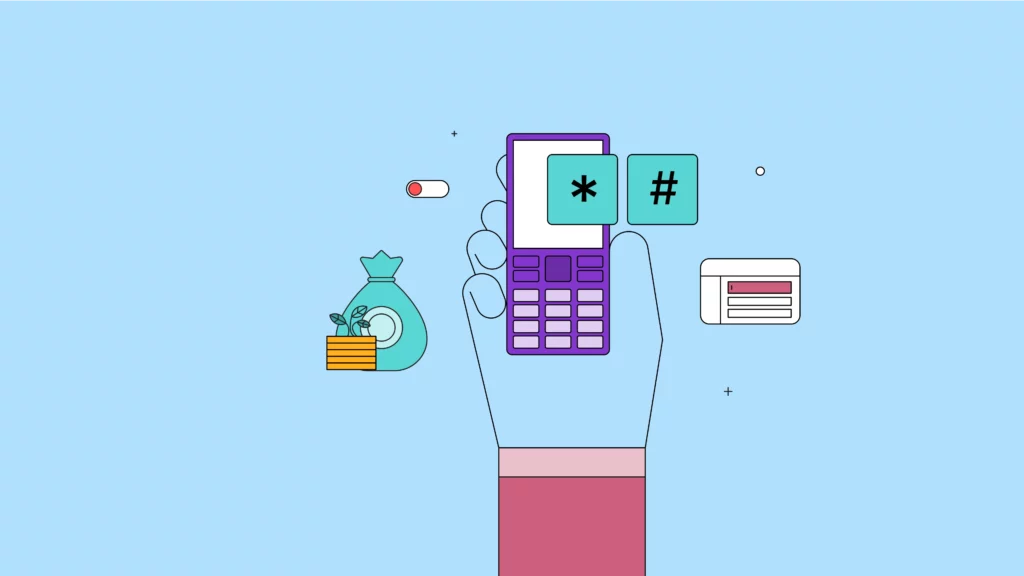
While access to mobile phones is available, smartphones are not as easy to come by for this marginalized populace. Even when they get access to smartphones, many of them are not literate and cannot read, write or understand the English language. Hence, navigating through a mobile or web loan app may prove challenging. For this reason, an alternative lending channel like USSD that is easily accessible to these individuals becomes necessary.
Some years ago, a one-time minister of communications, Maj. Gen Tajudeen Olanrewaju said telephones are not for the poor. But he could not have been more wrong. Companies like MTN and Airtel sprung up and revolutionized telecommunications, and today, Africa is well-connected and at par with global standards. The same thing can happen for credit. However, if credit will reach the entirety of the mass market, it must utilize the simplest and most accessible lending channel — USSD.
The next question is: How do you create loan products that reach these people who obviously use little technology? That’s where lending tech providers like Lendsqr come in. Using smart technology by these providers, you can manage loan origination to recover efficiently and build a thriving loan business.
Challenges of USSD
Significant Non-Performing Loan (NPL) risk: Although USSD allows for reaching a larger audience, it also presents the challenge of a substantial non-performing loan (NPL) rate. For these persons, you can only lend them a small amount due to the risk-averse nature of USSD. This also means that if they don’t pay back, you may have to forfeit such losses because you’re likely to incur more losses if you chase down a rabbit hole for such a small amount of money.
Lack of financial knowledge and discipline: Most marginalized persons have never had access to formal credit, and your contact with them may be their first time accessing credit. So, it’s expected that they lack the financial discipline and knowledge to handle and make the best use of a loan. Picture this: Mrs A borrowstwenty thousand naira from a lender to purchase a hair dryer for her hair salon to introduce hair washing and drying services to make more money. Regrettably, she becomes distracted and uses a significant portion of the loan for unnecessary expenses. Consequently, she finds herself without a dryer, no boost in income, and facing an impending loan repayment that she may struggle to meet, placing the burden of losses on the lender.
Absence of stringent Know Your Customer (KYC): One of the most significant limitations of lending with USSD is the absence of KYC checks, such as image comparison and liveness checks. A lender who opts for the USSD lending channel must think up ingenious and effective means to confirm the authenticity of the borrower. Luckily, Lendsqr has excellent integrations that can facilitate this identity check, using a smart combination of Bank Verification Number (BVN) and National Identification Number (NIN) to ensure the borrower on the other end of the call is in sync with the IDs provided.
Limited loan recovery payment method: Adding a payment method to recover loans is another limitation of lending with USSD, as not many payment methods are feasible. Lenders like Migo, who are prominent propagators of USSD lending, although doing well, have often commented on the high rate of NPLs, mainly due to the difficulty in integrating a suitable payment method(s). As the ardent problem-solvers we are, Lendsqr has created a smart way to incorporate direct debit to USSD; this way, borrowers can have their financial details protected and still repay their loans. Moreover, with card payment methods, according to the Payment Card Industry (PCI) and Cybersecurity laws, an individual is expected never to pass card information via USSD. There are repercussions for any entity that requests customer card details via unsafe channels.
The untapped goldmine
A lender who effectively implements USSD and fills the credit gap, particularly among marginalized and financially excluded groups, can gain substantial business returns. Besides, they’ll be instrumental in financing dreams and lifting people out of extreme poverty.
This is similar to where Airtel and MTN were with telecommunication in Nigeria two decades ago. Many thought Africa was a lost cause and too poor a continent to invest in something as advanced as telephones—“They can barely feed. What would they need phones for?”
Despite Africa’s poor foreign exchange (FX) position, these telecom giants have amassed a significant portion of their global growth from the “poor” African market. The same can be said for USSD as a tool to reach the financially excluded. Any lender who gets it right stands to transform the credit ecosystem. Send us a message at [email protected], and let’s help you get it right with USSD.
You need the right technology for lending success
We’re in the business of helping lenders worldwide have access to the best technology, and use credit to lift billions to their dreams and a better life.
Obtaining an FCA consumer credit license is a key step for businesses that want to offer loans, credit cards, BNPL, or other consumer credit products in the UK. This guide explains who needs FCA authorization, the application process, eligibility requirements, expected costs, and practical tips to help lenders navigate the licensing process successfully.
If you’re a non-profit or development finance institution (DFI), it should be easier to run a lending program if you're already doing the hard part of reaching people most others won’t.
The end-to-end loan management software that’s rewriting the rules for lenders globally by offering enterprise-grade features without the enterprise-grade costs.
September 30, 2024
Make Better Informed Decisions
Our decision model Oraculi helps you handle all modules required to form the decision model for your lending business, convenient and
easy.